Pacita Abad
Ends Sep 2
- On View
- Exhibition
Continue to Page to Keep Reading
The following is an excerpt of the full page
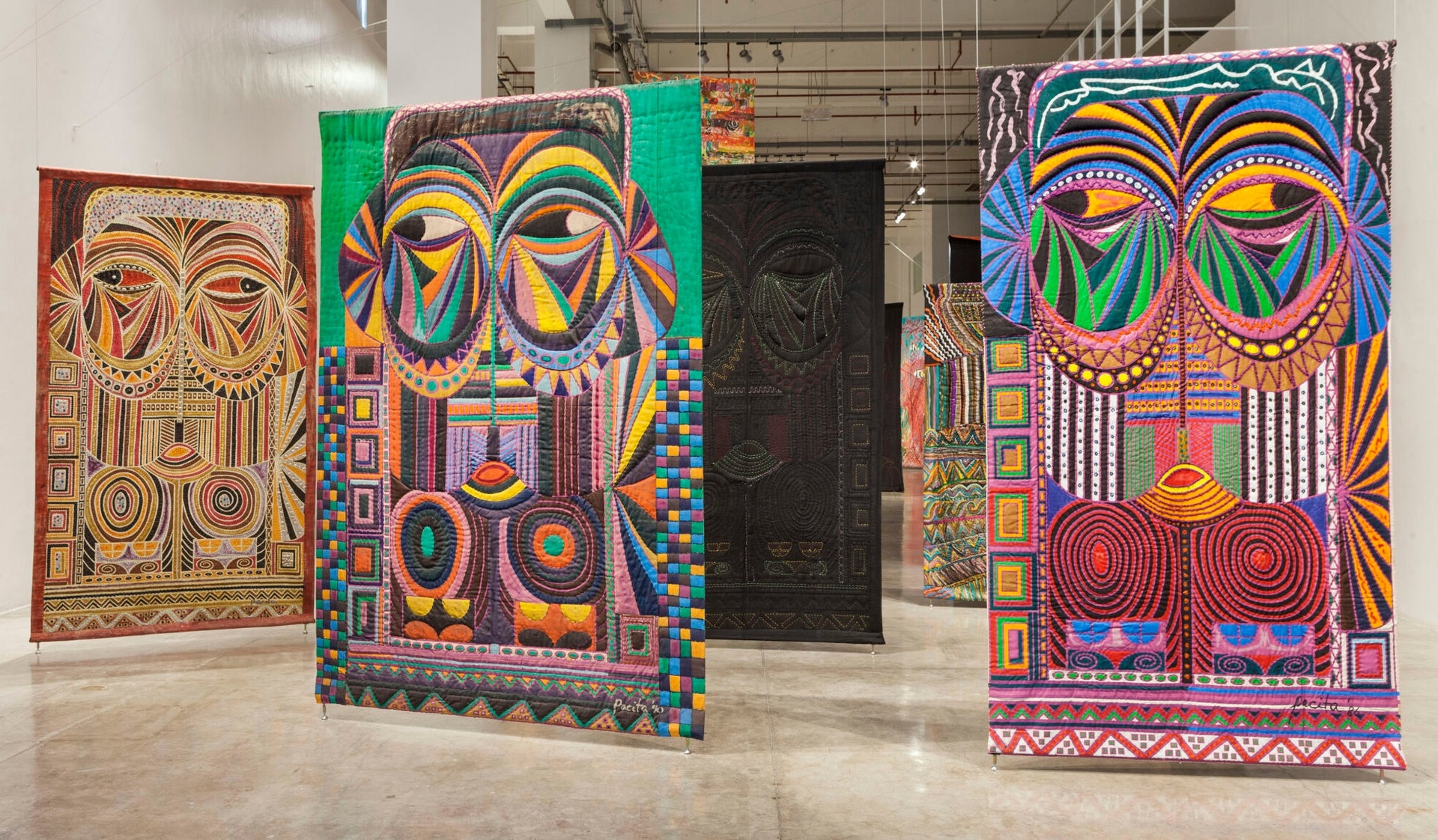
Installation view of the exhibition Pacita Abad: A Million Things to Say at the Museum of Contemporary Art and Design, Manila, De La Salle-College of Saint Benilde, 2018. Courtesy Pacita Abad Art Estate and MCAD Manila. Photo: At Maculangan/Pioneer Studios.
Leslie Martinez and Elena Ketelsen González on Selena
- Video
Continue to Page to Keep Reading
The following is an excerpt of the full page
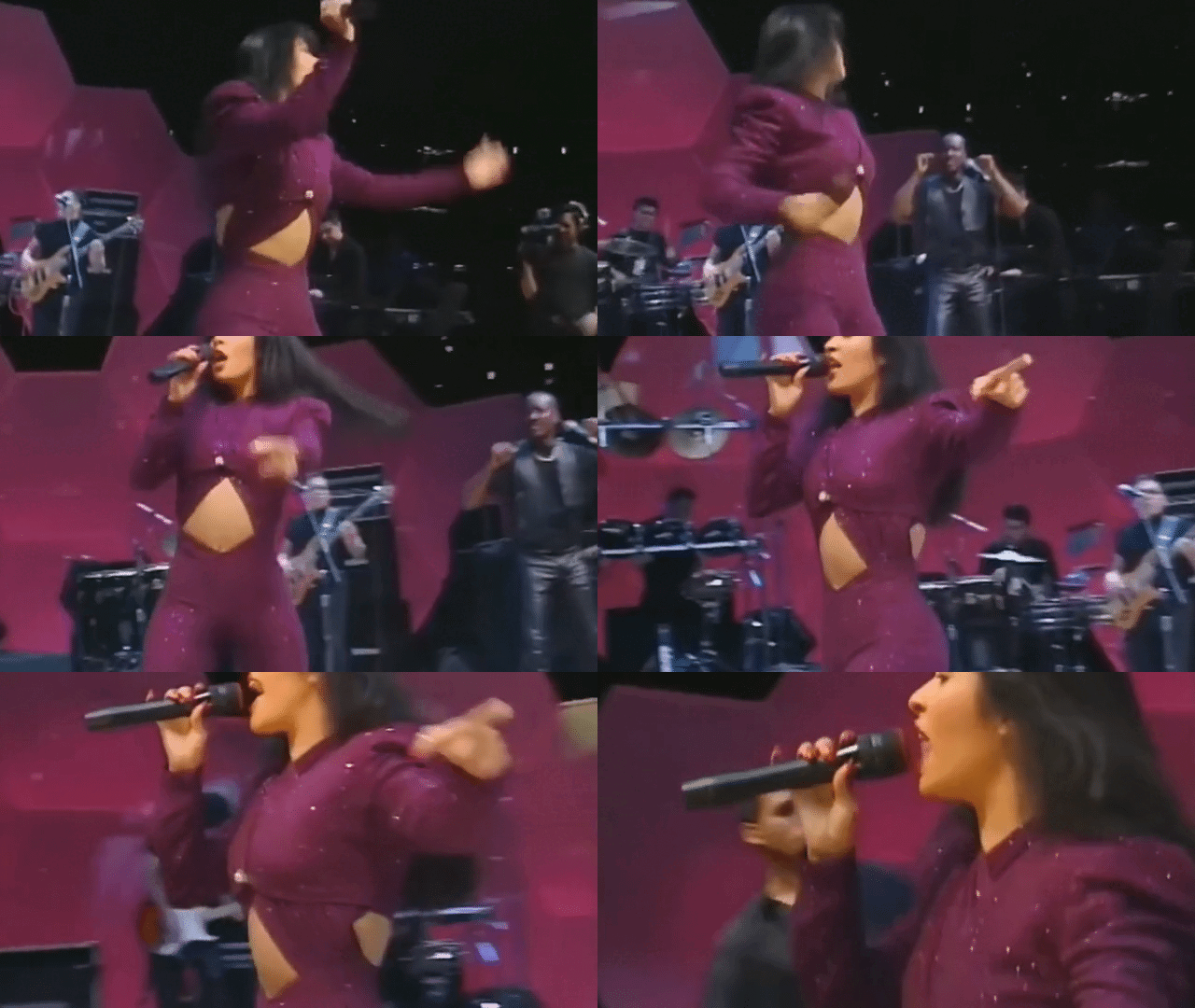
Video and Editing by Marissa Alper. Directing and Sound by Nora Rodriguez.
Selena's 1995 Houston Astrodome performance is the pinnacle of artistic expression, and we will not be taking comments.
...unless they're from artist Leslie Martinez and curator Elena Ketelsen González. The two sat down to discuss the iconic "Queen of Tejano Music," and the ethos of holding absolutely nothing back—on stage and in the studio.
Yto Barrada
Le Grand Soir
Apr 25
- Ongoing
- Exhibition
Continue to Page to Keep Reading
The following is an excerpt of the full page

Installation view of Yto Barrada: Le Grand Soir.
Kris GravesJoin Charisse Pearlina Weston in her Studio
- Video
Continue to Page to Keep Reading
The following is an excerpt of the full page
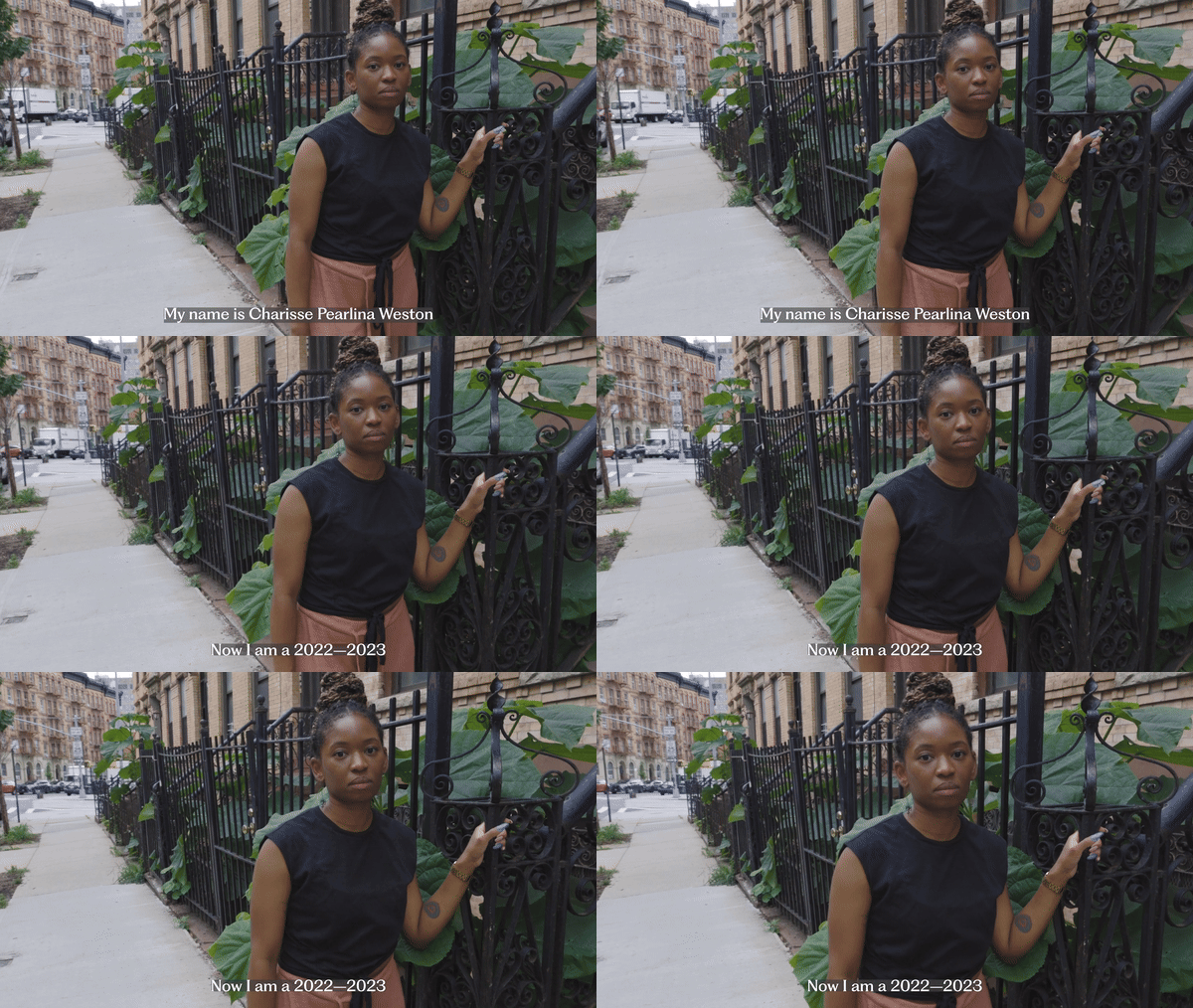
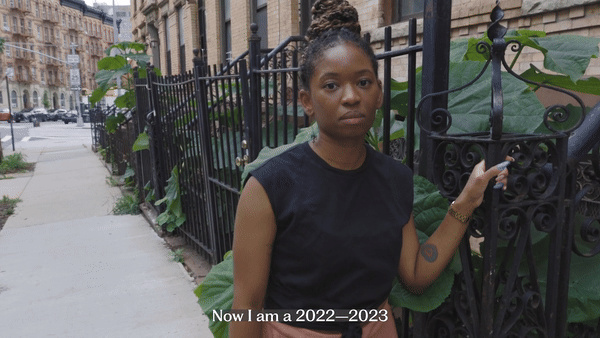
“I wanted to pose questions around representations of intimacy, of disrupting, looking, as methods of resistance." — Charisse Pearlina Weston
Charisse Pearlina Weston's delicate sculptures take up the subject of Occupied Look, a program started by the New York City Department of Housing and Preservation and Development (HPD) in the 1980s that affixed hundreds of window decals onto buildings across the city. The program, born as the Bronx was increasingly becoming politicized as a site of urban decay, essentially projected a vision of renewed interior space while boarding up vacant buildings.
Visit Charisse in her studio and take a walk through Harlem to hear about the ways her research into the history of New York has shaped her sculpture practice. See Charisse's works when you visit And ever an edge: Studio Museum Artists in Residence 2022–23.
Melissa Cody
Webbed Skies
Ends Sep 9
- On View
- Exhibition
Continue to Page to Keep Reading
The following is an excerpt of the full page

Melissa Cody. Untitled. 2022. Wool warp, weft, selvedge cords, and aniline dyes. 8′10′′ x 56′′ (269 x 142 cm). Courtesy the artist
Forage for Materials with Devin N. Morris
- Video
Continue to Page to Keep Reading
The following is an excerpt of the full page
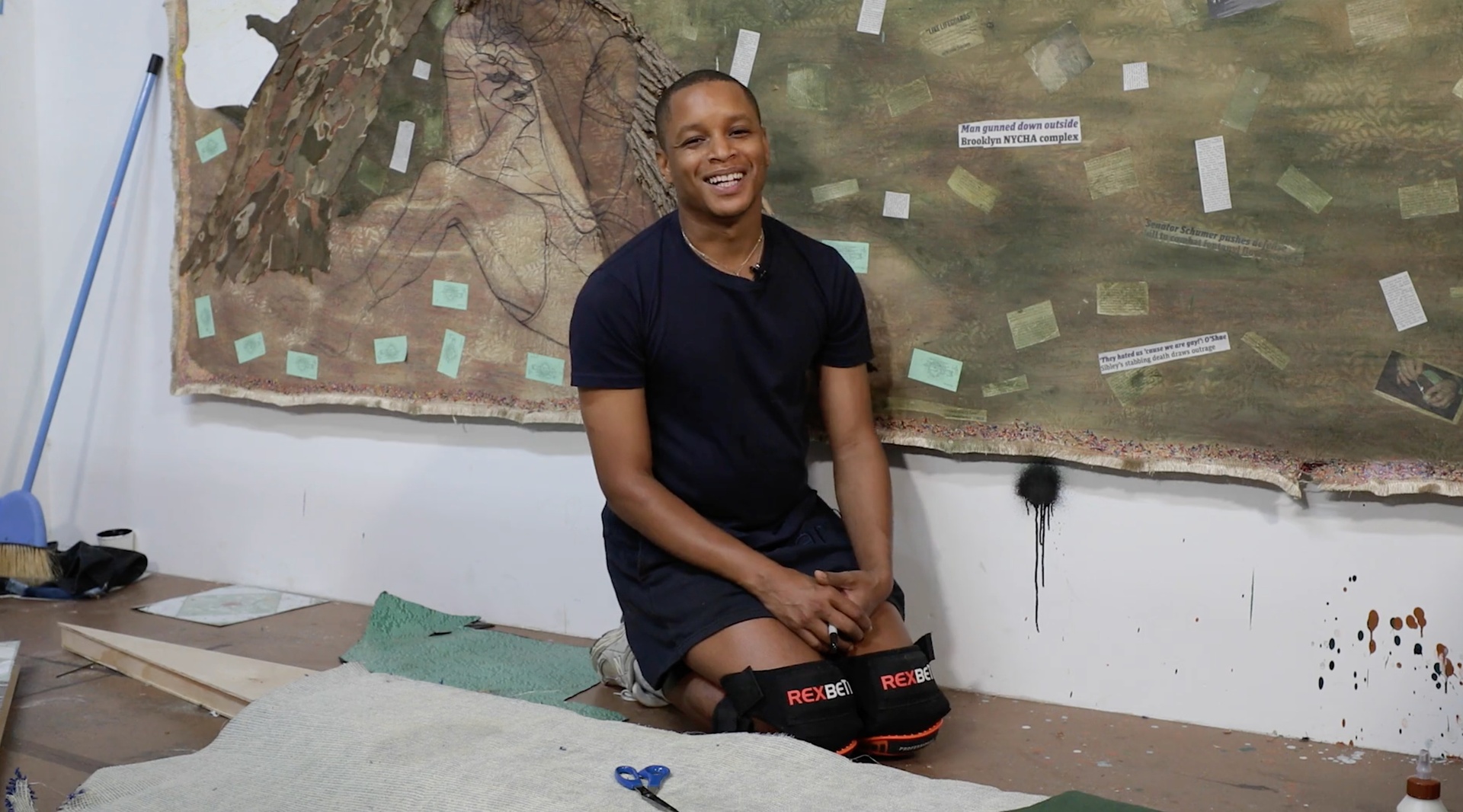
“My practice has always been one of looking. Looking down, specifically.” — Devin N. Morris
Join Studio Museum in Harlem 2022–23 Artist in Residence Devin N. Morris on one of his daily walks foraging the streets of Harlem for feathers, trash cans, paint chips, and more. Hear Morris speak about his relationship to the neighborhood and see his gathered objects become colorful assemblages in And ever an edge at MoMA PS1.
Meet the Artists of Teen Art Salon
- Audio
Continue to Page to Keep Reading
The following is an excerpt of the full page

Ryan Muir
The artists of Teen Art Salon have been working alongside one another for years. Late nights fueled by bodega snacks and charcoal fumes bonded them to the Long Island City organization. On the occasion of their exhibition at MoMA PS1, the artists reunited to talk about how their work has evolved, what people get wrong about teens, and why sour straws are essential in the creation of a masterpiece. Listen to the first in a series of conversations between Teen Art Salon founder Isabella Bustamante, and Assistant Curator Elena Ketelsen González, along with artists Isa Madai Azpeitia Camargo, Luis Cuesta, Jolene Fernandez, Maya Greenberg, Daphne Knouse, Aneesa Razak, and Quinn Wilke.
Regina José Galindo
Tierra
Ends Aug 26
- On View
- Exhibition
Continue to Page to Keep Reading
The following is an excerpt of the full page

Regina José Galindo. Tierra (still). 2013. High-definition video (color, sound). 33 mins, 30 secs. The Museum of Modern Art, New York. Gift of Mario Cader-Frech through the Latin American and Caribbean Fund
Leslie Martinez on Their Process
"Pushing into Unknown Territory"
- Video
Continue to Page to Keep Reading
The following is an excerpt of the full page
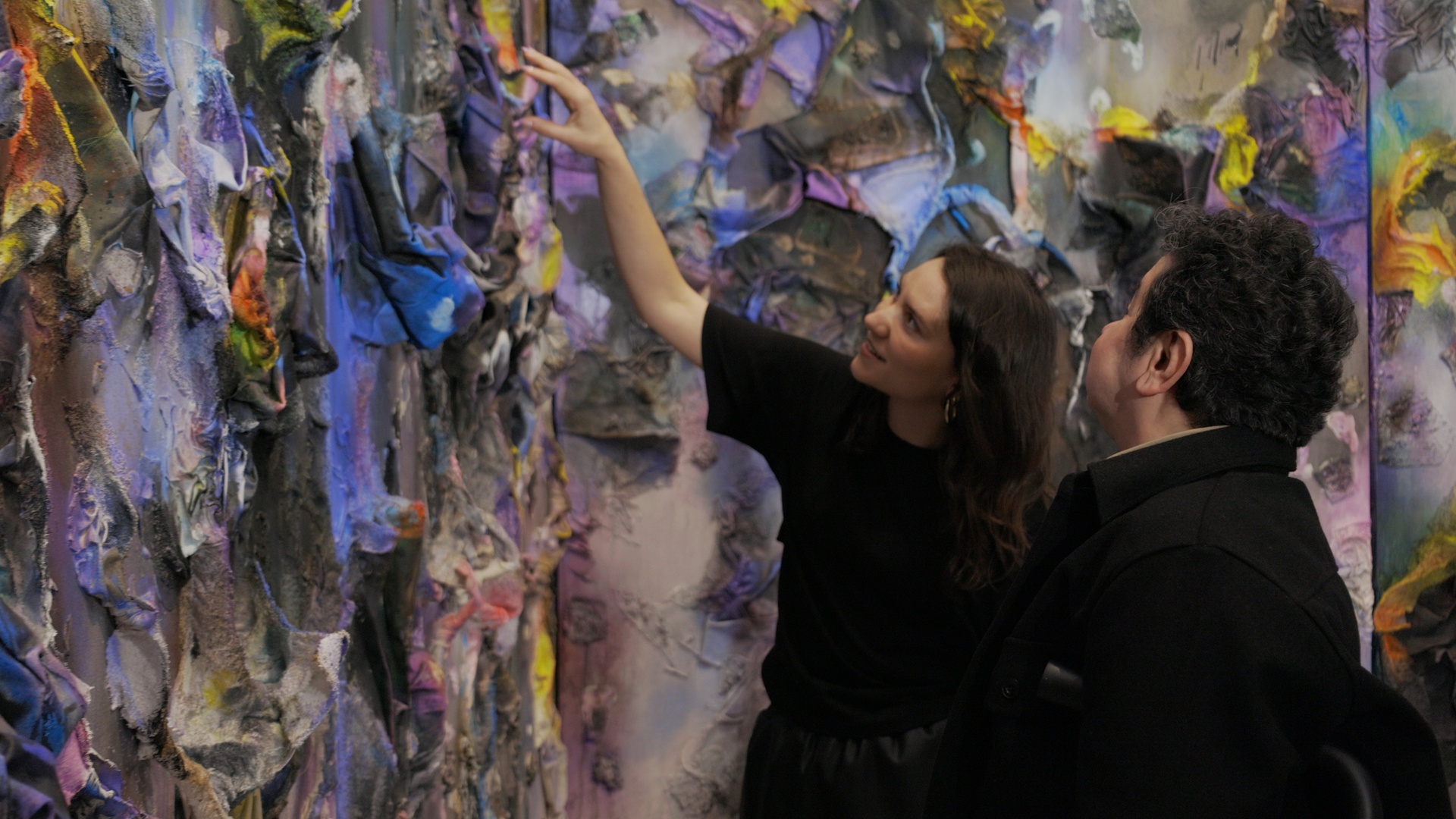
"If a material could fold and bend and twist and turn, then it can hold gesture the way that a brush moves through paint, but on an expanded scale." — Leslie Martinez
Leslie Martinez sat down with Assistant Curator Elena Ketelsen González to talk about the unconventional materials that make up their paintings, as well as how they draw on generational practices of survival and sustenance learned from their family to push forward new ideas.
"The right element for art to be free"
Rirkrit Tiravanija reflects on three decades of work with MoMA PS1
- Video
Continue to Page to Keep Reading
The following is an excerpt of the full page
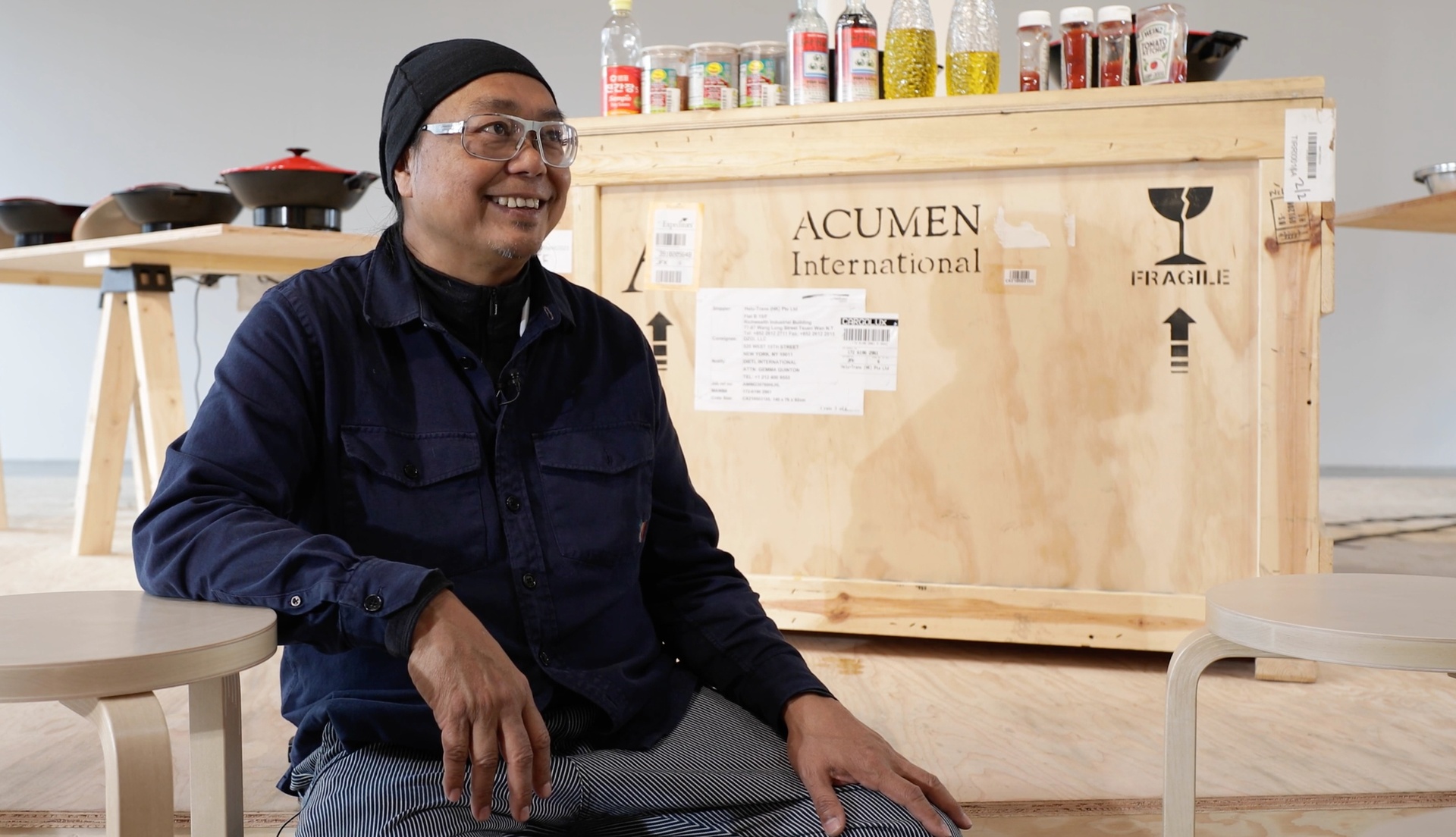
There's standing water. Peeling paint. Blackboards from the building's past life as a school, still haunting some rooms. It's just the right alchemy to foster new ideas. Or, as Rirkrit Tiravanija remembers, "for art to be free."
Join Tiravanija at MoMA PS1, where he reflects on three decades of collaboration with the museum. After five exhibitions at PS1, the artist returns for his largest survey to date: A LOT OF PEOPLE. Plan your visit to see the exhibition, on view through March 4, 2024.